

How to Watch J.League Football in Japan: Tickets & Travel Guide
Last updated:
Stadiums, and Football Travel Tips
- 2026-09-24
- 12:12 pm
- English
※This post contains paid promotions.
Watching a football match can be a great way to experience a different side of Japan.
J.League clubs are based in cities and communities across the country, and matchday often includes much more than the 90 minutes on the pitch — supporter chants, local food, club colours, stadium traditions, and the neighbourhood around the venue.
Whether you already follow Japanese football or simply want to add a live sporting event to your trip, this guide will help you plan your first football match in Japan. We will cover where to sit, what to expect on matchday, how to find official tickets, and how to combine football with sightseeing and other experiences around Japan.
And if there is no match during your stay, we will also introduce ways to experience Japanese football beyond matchday.

About the Author: Wakutaka Sports
Wakutaka Sports is a Japan-based website helping sports fans enjoy matchdays and sports-related travel across Japan. We visit stadiums and arenas for professional baseball, J.League football, and basketball, and publish practical guides covering seating, transportation, hotels, local food, and matchday travel.
The site is created by a qualified Domestic Travel Service Supervisor in Japan with experience in travel planning and sports-related tour development.
Qualifications & Expertise Expertise
- Domestic Travel Service Supervisor — Japanese national qualification
- Baseball Knowledge Certification, Level 2
- Japan sports travel, stadium guides and matchday trip planning


Why Watch a Football Match in Japan?
A J.League match is not just another attraction to add to your itinerary.
Many Japanese football clubs have strong connections with their home cities and regions. Supporters wear club colours, sing throughout the match, enjoy local stadium food, and create an atmosphere that can feel very different from one destination to another.
For international visitors, that means football can also become an introduction to local Japan. You might spend the morning sightseeing, try regional food in the afternoon, and finish the day surrounded by thousands of supporters at a stadium.
Think of the match as part of your Japan trip — not as a separate event.
What Is the J.League?
The J.League is Japan’s professional football league system, with clubs based in cities and communities across the country. Its professional competitions include J1, J2, and J3, with J1 as the top division.
Some Japanese clubs also compete in Asian competitions such as the AFC Champions League Elite (ACLE) and AFC Champions League Two.
If you are travelling to Japan to support an overseas club, the seating, transportation and matchday advice in this guide will also be useful.
Where Should You Sit at a Football Match in Japan?
Choosing the right area is one of the most important decisions for a first-time visitor.
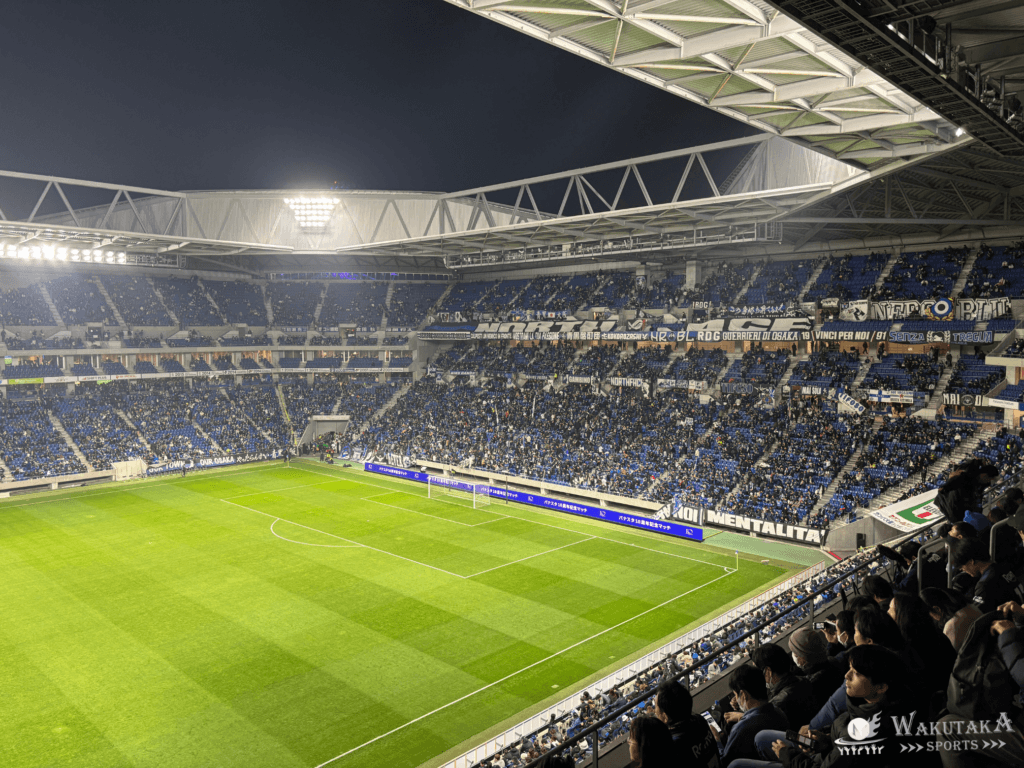
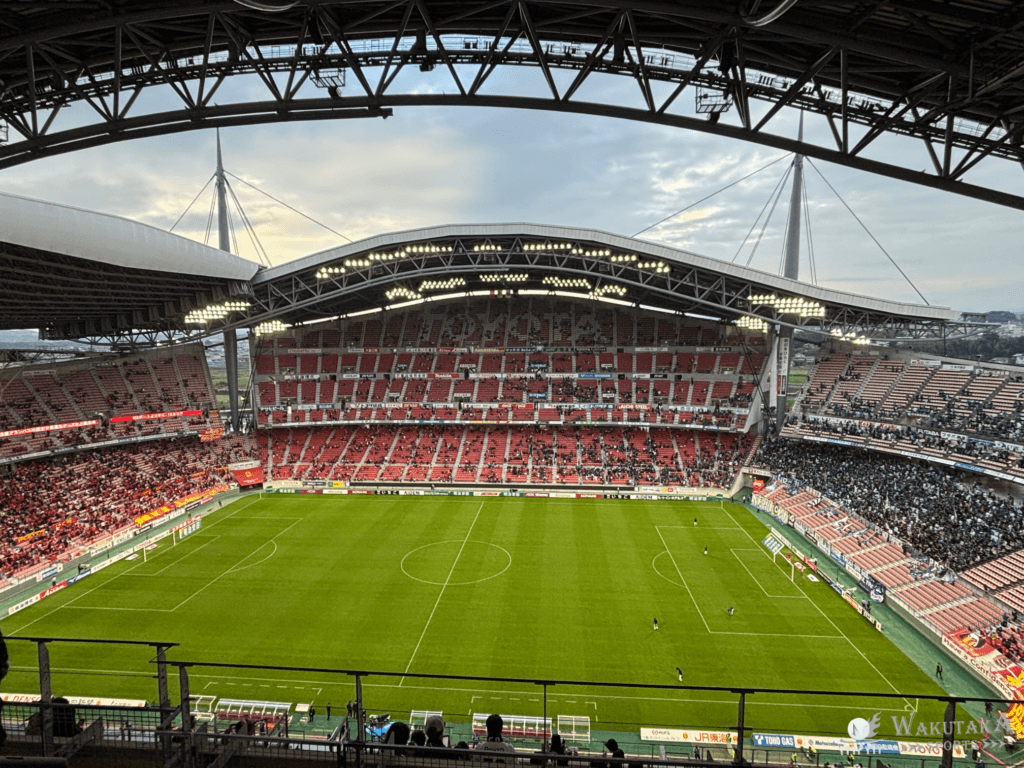
Japanese stadiums commonly separate the most active home and away supporters, while the main and back stands generally offer a more relaxed way to watch the game.
| Area | Atmosphere | Best for |
|---|---|---|
| Home supporter area | Chants, flags and high energy | Home supporters |
| Away supporter area | Dedicated visiting support | Away supporters |
| Main stand | More relaxed | First-time visitors |
| Back stand | Casual but atmospheric | Neutral fans and families |
Home and Away Supporter Areas
The most passionate supporters are often located behind the goals. Expect chanting, drums, flags, and supporters standing for long periods in some sections. If you actively support one of the clubs, these areas can be an exciting choice.
However, you should pay careful attention to ticket categories. Some areas restrict shirts, scarves, flags, or other items representing the opposing team.
Always check the rules published by the club for your specific match.
Where Should a First-Time Visitor Sit?
If you are a neutral visitor, the main stand or back stand is usually the easiest place to start.
You can watch the tactical shape of the game more clearly while still seeing and hearing the supporter sections.
What Is a J.League Matchday Like?
You do not need to arrive just before kick-off. For a first visit, arriving around 60 to 90 minutes early gives you time to find your entrance and seat, look around the stadium, try food, see club merchandise, and watch the warm-up.
As kick-off approaches, the atmosphere usually becomes more intense around the supporter sections.
After full-time, remember that thousands of people may leave at once. Railway stations, buses, and surrounding streets can become busy.
How to Buy J.League Tickets in Japan
For international visitors, there is no need to start by searching multiple Japanese ticketing websites.
The J.League has an official English page for watching football in Japan, with ticket links and official club websites for J1, J2, and J3 clubs.
If you already know which club you want to watch, start there.
Find official ticket links and club websites for J1, J2 and J3 on the English J.League website.
Before booking, check the stadium, kick-off time, seating category, and whether your section is intended for home or away supporters.
For high-demand matches, buying in advance is safer than relying on tickets being available on matchday.
Build Your Football Trip Around Japan
A football trip does not have to mean travelling to Japan only for the match.
The destinations below are particularly interesting because football can be combined with sightseeing, food, culture, or another travel experience.
Tokyo: Football + One of the World's Biggest Cities
Tokyo is one of the easiest places to add football to an existing Japan itinerary.
J.League matches are played across the metropolitan area, while major fixtures are also staged at MUFG Stadium (Japan National Stadium). J.League has continued to use the National Stadium as a major showcase venue in the 2026/27 season. Because you are already in central Tokyo, you can keep football as just one part of the day.
You might explore a neighbourhood, join a food or cultural experience, and then head to the stadium later in the day.
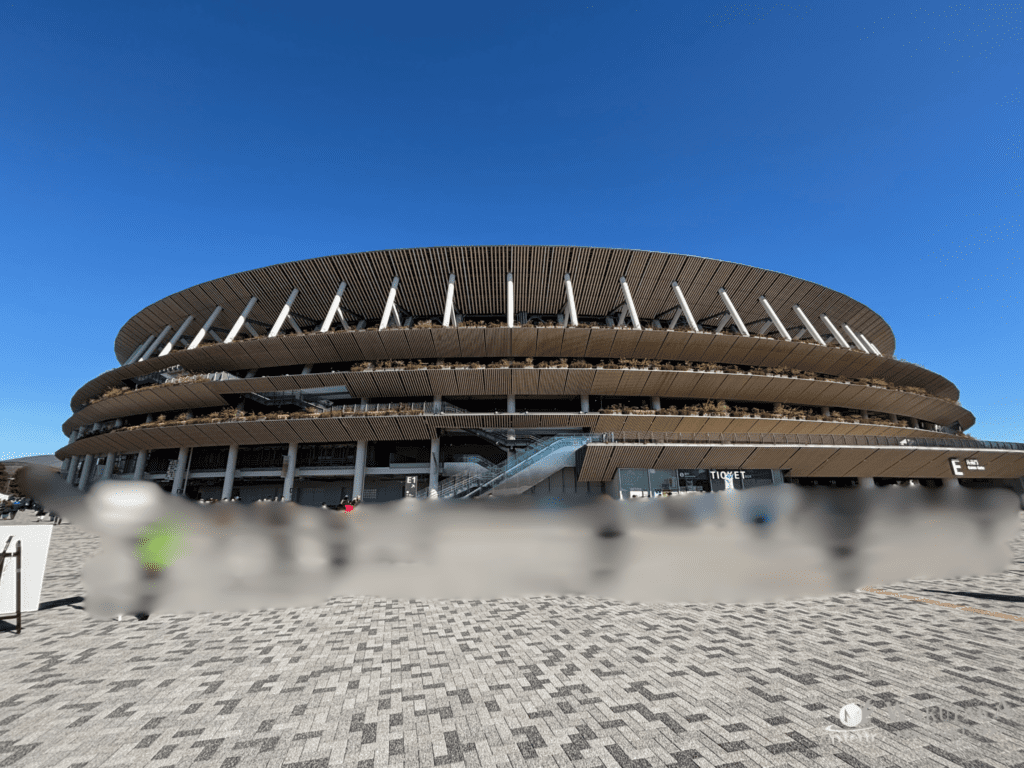
Discover the stadium and surrounding destination even when there is no match. This football-focused experience combines Japanese football with local sightseeing.
Discover food, sightseeing, cultural experiences and tours for the rest of your stay.
Shimizu & Mt. Fuji: Football with a View of Shizuoka
Shimizu offers a very different type of football trip. Shimizu S-Pulse play at IAI Stadium Nihondaira, and the stadium is well known for its setting overlooking the Shizuoka area, with views toward Mt. Fuji possible in clear conditions.
This makes Shimizu particularly interesting for travellers who want to combine football with the wider Shizuoka and Mt. Fuji area.
Rather than trying to squeeze a full Mt. Fuji excursion into the same day as a match, consider using the day before or after the game.
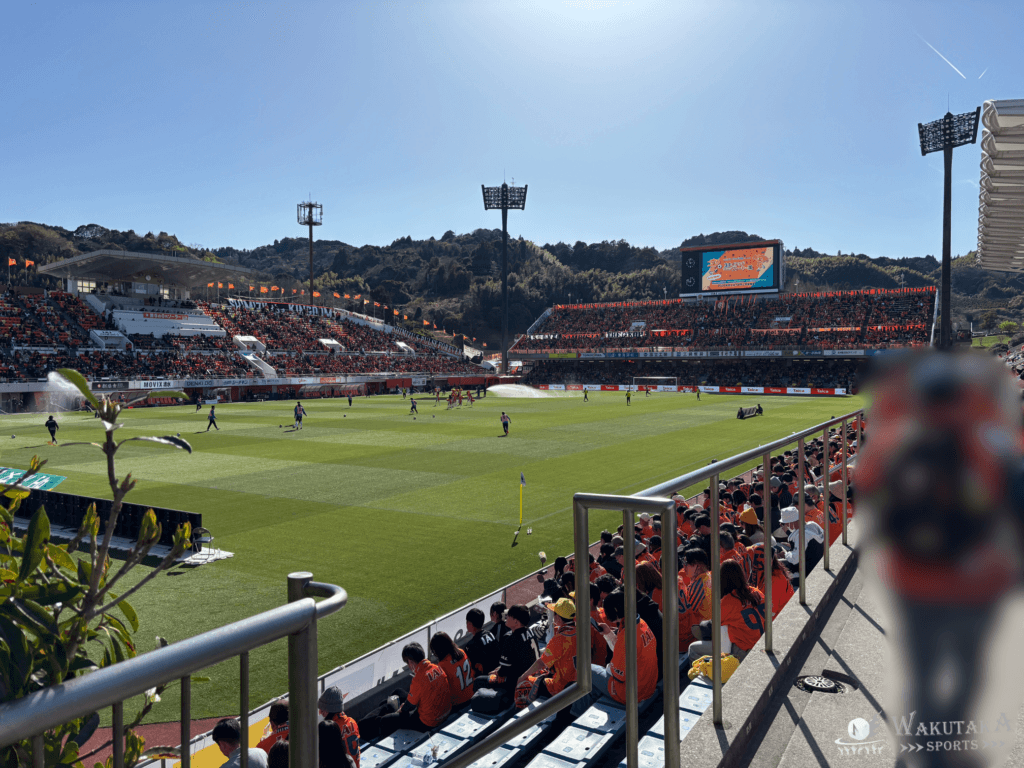
Discover the stadium and surrounding destination even when there is no match. This football-focused experience combines Japanese football with local sightseeing.
Discover food, sightseeing, cultural experiences and tours for the rest of your stay.
Kyoto: Traditional Japan + J.League Football
Kyoto gives visitors a clear contrast between traditional sightseeing and modern Japanese football.
Kyoto Sanga F.C. play at SANGA STADIUM by KYOCERA in Kameoka, rather than in central Kyoto. That makes planning important — but it also creates an interesting itinerary.
You can spend part of your trip exploring central Kyoto and then travel to Kameoka for the match.
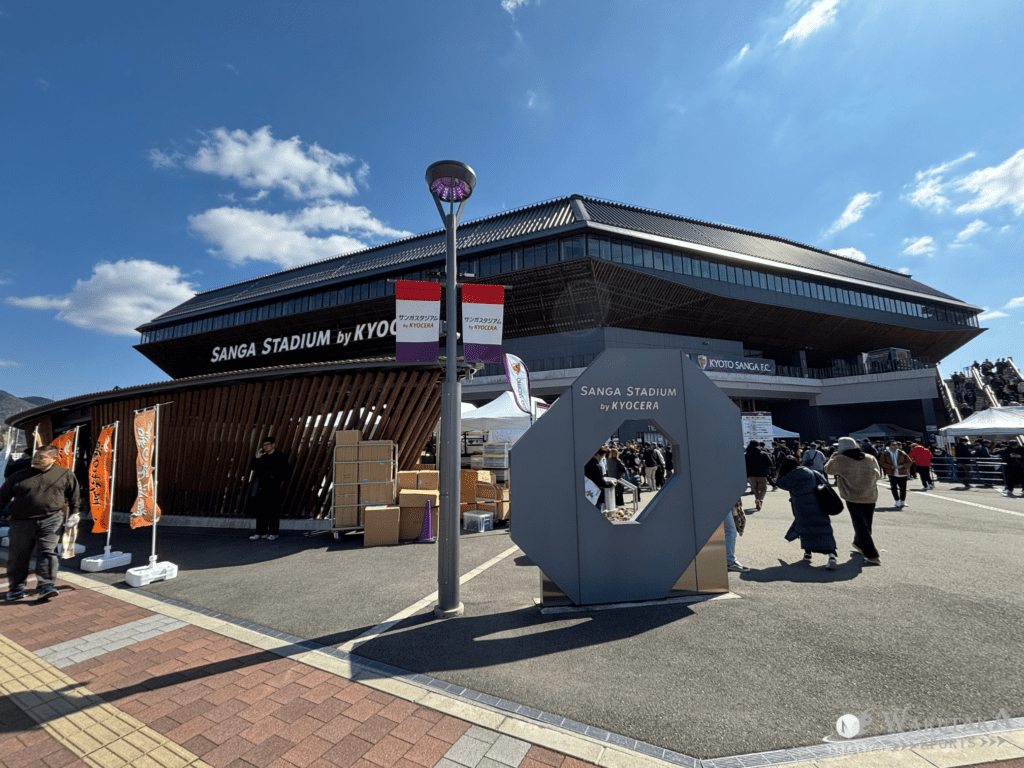
Discover the stadium and surrounding destination even when there is no match. This football-focused experience combines Japanese football with local sightseeing.
Discover food, sightseeing, cultural experiences and tours for the rest of your stay.
Hiroshima: Football in the Heart of the City
Hiroshima is one of the clearest examples of football fitting naturally into an urban sightseeing itinerary.
Sanfrecce Hiroshima play at EDION PEACE WING HIROSHIMA, located in Hiroshima’s central area. That means you do not need to dedicate an entire day simply to reaching the stadium.
Football can become one part of a day that also includes sightseeing and local food.
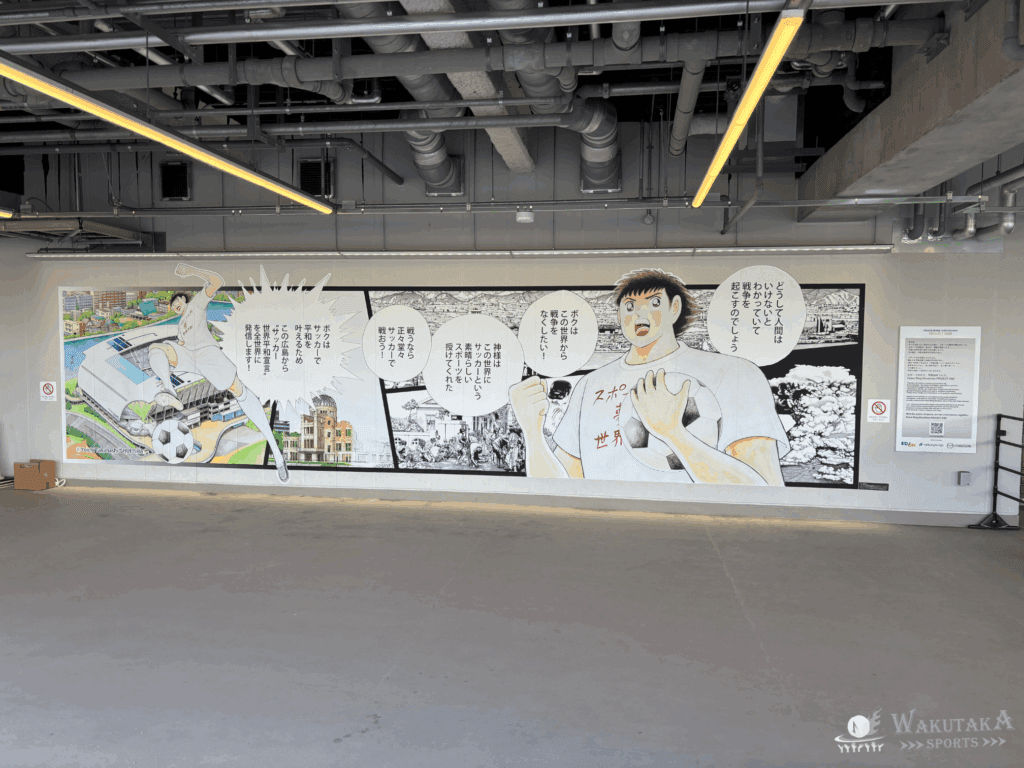
Discover the stadium and surrounding destination even when there is no match. This football-focused experience combines Japanese football with local sightseeing.
Discover food, sightseeing, cultural experiences and tours for the rest of your stay.
Nagasaki: A Stadium That Is Part of the Destination
Nagasaki offers a particularly interesting model for sports travellers.
PEACE STADIUM Connected by SoftBank is part of Nagasaki Stadium City, a complex that also includes an arena, hotel, commercial facilities, food, and other attractions.
That makes the stadium area itself part of the travel experience rather than simply somewhere you visit for two hours.
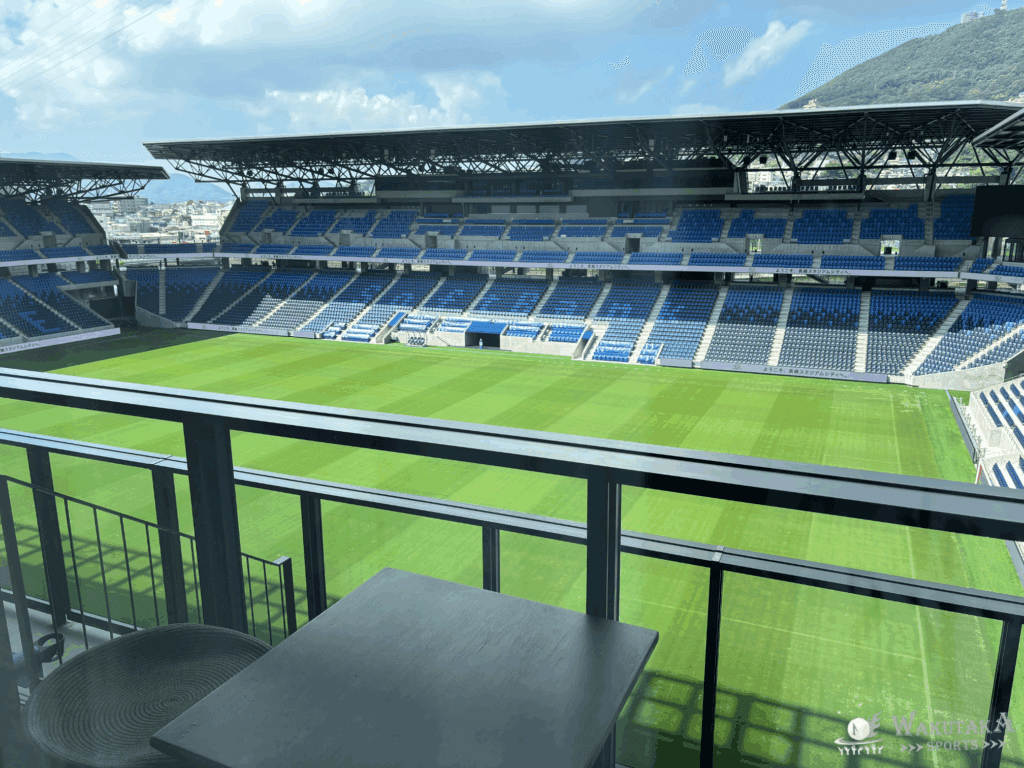
Discover the stadium and surrounding destination even when there is no match. This football-focused experience combines Japanese football with local sightseeing.
Discover food, sightseeing, cultural experiences and tours for the rest of your stay.
More Ways to Find Things to Do in Japan
Viator is our main platform for experiences featured in this guide, but you can also browse tours, attractions and travel services on other major booking platforms.
Practical Tips for Your Football Trip
Once you have chosen your match and destination, a few practical decisions can make the trip easier.
Hotels
Do not automatically choose the hotel closest to the stadium.
For many football trips, staying near a major railway station or sightseeing area gives you a better balance between matchday access and the rest of your itinerary.
Choose a hotel that works for both matchday and sightseeing. Staying near a major station can often be more convenient than staying right next to the stadium.
Transportation
Public transportation is often the simplest way to reach urban stadiums.
Check the official stadium or club access information before travelling, particularly for venues that require a bus connection.
Mobile Data
Reliable mobile internet is useful for digital tickets, navigation, translation, train information, restaurant searches, and checking last-minute match information.
Frequently Asked Questions
Can foreign visitors buy J.League tickets?
Yes. Start with the official English J.League ticket page, which links to official club ticket sales and websites.
Where should I sit for my first match?
The main stand or back stand is usually a comfortable choice for neutral and first-time visitors.
How early should I arrive?
Around 60 to 90 minutes before kick-off gives you time to explore the stadium, find your seat and enjoy the pre-match atmosphere.
Can I experience Japanese football when there is no match?
In some destinations, stadium visits and football-focused experiences can be combined with sightseeing even on non-matchdays.
Should I plan the match or the city first?
For most first-time visitors, choosing the cities you want to visit and then checking the J.League schedule is usually the easiest approach.
Enjoy Football as Part of Your Japan Trip
You do not need to build your entire holiday around a football stadium. Instead, let football become a way to experience somewhere in Japan more deeply.
Choose a destination that interests you, check the J.League schedule, buy your ticket through an official channel, and plan the rest of the day around the city. And if there is no match during your stay, a football-focused stadium and sightseeing experience may still allow you to discover Japanese football.
The match can be the highlight of the day — but it does not have to be the whole trip.

About the Author: Wakutaka Sports
Wakutaka Sports is a Japan-based website helping sports fans enjoy matchdays and sports-related travel across Japan. We visit stadiums and arenas for professional baseball, J.League football, and basketball, and publish practical guides covering seating, transportation, hotels, local food, and matchday travel.
The site is created by a qualified Domestic Travel Service Supervisor in Japan with experience in travel planning and sports-related tour development.
Qualifications & Expertise Expertise
- Domestic Travel Service Supervisor — Japanese national qualification
- Baseball Knowledge Certification, Level 2
- Japan sports travel, stadium guides and matchday trip planning